
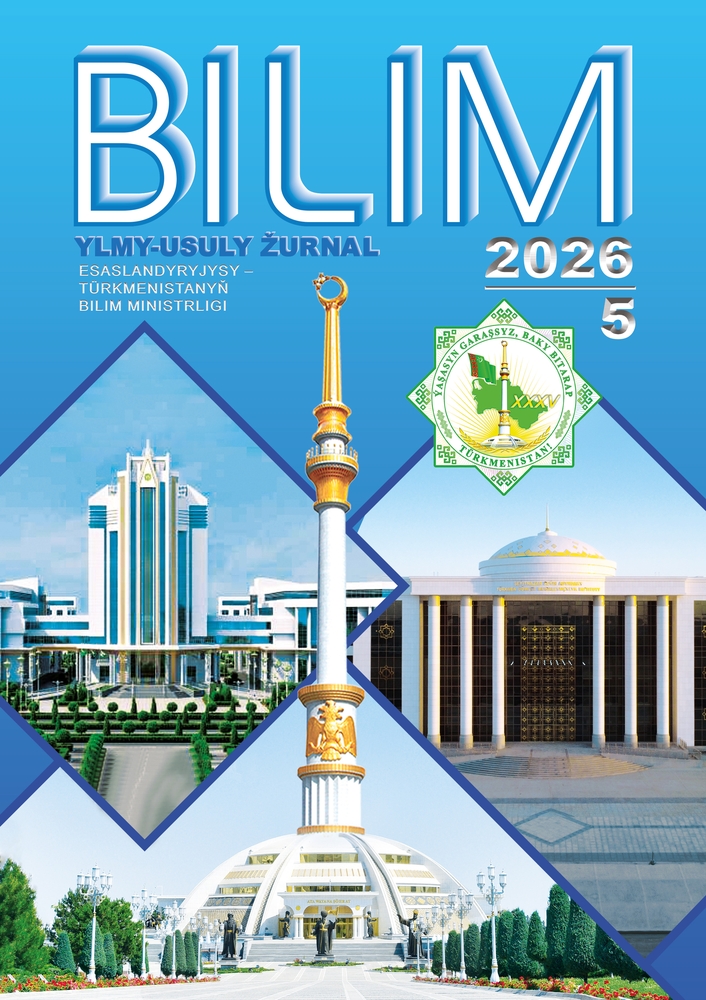
The new issue of the journal has been published
The 5th issue for 2026 of the scientific-methodological journal 'Bilim' of the Ministry of Education of Turkmenistan, dedicated to the 35th glorious anniversary of Turkmenistan's Independence, has come off the press. The content of most articles featured in this issue is intertwined with dates and events related to our Independence Day. At the beginning of the journal, the profound speech delivered by the National Leader of the Turkmen people, Chairman of the Halk Maslahatsy of Turkmenistan, Hero-Arkadag at the general lecture lesson held at the Ruhyýet Palace in the city of Arkadag is published. Following this, the pages dedicated to political articles present works by experienced education workers J. Gurbangeldiyev, I. Saparlyyew, M. Charyyew, and veteran journalist A. Atayev. These articles detail the milestones passed and the lofty heights achieved in the country's education system during the years of Independence. It is emphasized that throughout the stages of reforms in the national education system, advanced foreign experiences and innovative technologies have been harmonized with national upbringing, morality, and historical roots originating from centuries past, thereby charting an exemplary and sustainable path of development; furthermore, by studying world experiences and with the aim of deepening the teaching of foreign languages, modern educational institutions and higher education schools have been opened. It is noted that Turkmenistan has transformed into a powerful state in education, science, culture and art, technologies, and the economy.
Under the rubric titled “Scientific Articles”, articles by six experienced professor-teachers and educators have been published. Dedicated to key topics such as effective directions for improving the education system of Independent Turkmenistan, the implementation of innovative technologies during the years of Independence and the reinforcement of its legal framework, the development of Turkmenistan's railway sector during the Independence era, perfecting teaching methodologies, and the pedagogical skills of teachers, these articles present readers with perspectives on vital contemporary issues. In B. Garayev’s article titled “Effective Directions of the Strategy for Improving the Education System of Independent Turkmenistan”, it is noted that in the Era of Revival of the New Epoch of the Powerful State, the task of raising an educated generation that is patriotic, hardworking, healthy, broad-minded, and harmoniously developed has acquired a profound strategic character. Emphasizing that the fundamental principles established by the National Leader of the Turkmen people, Gurbanguly Berdimuhamedov, regarding the education and upbringing of youth hold a significant place in the rich heritage of our people, attention is drawn to the fact that these principles are currently being successfully continued by our esteemed President Serdar Berdimuhamedov.
In the rubric titled “Preschool Education”, two articles are featured, providing information on inclusive child development as one of the modern educational methods of the Independence era, as well as the significance and operational specifics of conducting morning performances (matinees) in kindergartens. Pedagogical insights are articulated regarding how such events influence the development of a child's intellect and emotions, enhance their interests, and shape their character.
In the Era of Revival of the New Epoch of the Powerful State, profound reforms regarding the quality and content of education are being implemented in the general education institutions of our country under the wise leadership of our esteemed President. The rubric titled “General Education School” features articles elucidating these modern reforms. Articles by B. Gaipova and A. Nuryýewa titled “From the Experience of Instilling National Labor Education in the Young Generation of the Independence Era”, J. Emirowa titled “Introducing Digital Technologies into the Educational Process is a Profound Educational Reform of the Independence Era”, and A.Bakyyeva titled “Utilizing Digital Tools and Artificial Intelligence Capabilities in Turkmen Language Lessons” convey pressing contemporary issues in the education field to readers. In this article by A.Bakyyeva, it is noted that, alongside other subjects, conducting Turkmen language lessons—from their organizational stage to the very end—in connection with our happy life, festive traditions, and with the help of digital tools is of great significance.
In the rubric titled “Secondary Vocational Education”, two articles are placed; A.Babayewa's article discusses one of the modern educational hubs and the favorable opportunities created therein, while L.Allaberdiýewa's article focuses on the Minaret of Ma'mun and its exploration during the years of Independence. As a result of the tireless efforts of our esteemed President, it is noted that the number of secondary, secondary vocational, and higher education institutions, preschool education and upbringing institutions, and children's health and recreation centers equipped with modern teaching equipment is growing year by year, drawing attention to the fact that they create broad opportunities for widely introducing improved, modern teaching methods in the education system and providing our rising generation with education and upbringing at the level of world standards. Sincere wishes for long life and robust health are extended to Arkadagly Hero Serdar and the National Leader of the Turkmen people, Hero-Arkadag, who render special assistance in building modern educational centers.
In the rubric titled “Higher Education”, articles by four authors are placed. These articles describe the primary requirements set for modern educators, their pedagogical profile, the reflection of our people's ideas of Independence in Turkmen classical literature, and the moral standards in the harmonious development of the national identity with an independent society. In K. Ovezov’s article titled “Ideas of Independence in Turkmen Classical Literature”, it is noted: “When looking at Turkmen classical literature, it is not difficult to realize that establishing an Independent, sovereign state was the centuries-old dream of our great ancestors”; referencing the works of our classical poet Magtymguly Pyragy, numerous valuable thoughts on loving the Motherland and building a just, independent state are conveyed to readers. Meanwhile, G. Orazova’s article aims to teach students the economic efficiency of agricultural development. Emphasizing the ongoing work under the wise leadership of our esteemed President Serdar Berdimuhamedov to improve the regulatory and legal framework of livestock farming in our country, special attention is drawn to developing its technological base by constructing new livestock farms and complexes that meet modern standards. The author further reinforces her ideas with the aid of tables.
Overall, in the newly published 5th issue of the journal for 2026, substantial coverage is dedicated to impactful articles regarding the significant role of the national education system—developed on an innovative basis and grounded in global experience under the requirements of the educational policy successfully implemented in our country—in fostering a new generation of specialists among the rising youth who possess a broad outlook, are capable of skillfully managing innovative technologies, and are ready to navigate modern transformed industrial complexes. Likewise, the dedicated labor of education workers finds its vivid expression across the pages of the journal's new issue.