
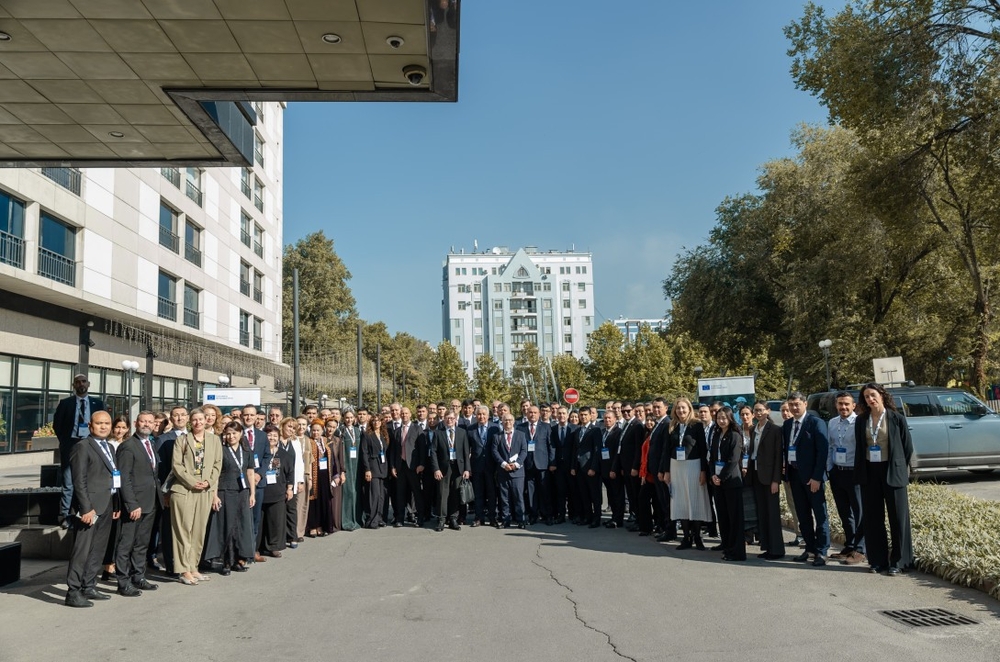
Information on the 1st meeting of the Steering Committee of the CADAP-8 program, held in Bishkek, Kyrgyz Republic, within the framework of the European Union’s Central Asia Drug Action Programme (CADAP)
Guided by its policy of positive neutrality, Turkmenistan actively cooperates with leading nations and prestigious international organizations within the framework of important programs and strategies. The country implements inter-regional and global projects in strategic areas such as energy, ecology, sustainable development, education, and healthcare. Turkmenistan maintains effective, long-term cooperation within the framework of the Central Asia Drug Action Programme (CADAP)—funded by the European Union (EU)—to combat the spread and consumption of narcotics. This program is implemented with the aim of reducing the demand for drugs in the region, improving prevention measures, and strengthening national strategies. Following the successful completion of previous phases of the CADAP program in the country, a special working meeting was held in Ashgabat to define the scope and requirements for technical cooperation under the new CADAP 8 phase. Prevention and education can be cited as key areas of cooperation within the program. In line with these key priorities, special educational programs tailored to national and cultural specificities are being developed to prevent harmful habits among the region's youth and to foster a healthy lifestyle. Efforts to exchange experience at the international level are also ongoing.
CADAP 8 (the eighth phase of the European Union's Central Asia Drug Action Programme) is an international project aimed at preventing the spread of drugs in the region and strengthening public safety and stability.
This new phase of the program will run from February 2026 to July 2030 and is being implemented by a consortium led by Spain's FIAP, in partnership with France's CIVIPOL and the UN Office on Drugs and Crime (UNODC). The program promotes a balanced approach grounded in scientific principles, human rights, and gender equality, and is divided into the following two main components:
1. Reducing illicit drug trafficking (supply) and enhancing security: Coordinated by the UN Office on Drugs and Crime (UNODC), this component focuses on strengthening inter-regional cooperation, improving border control, and combating the spread of illicit drugs.
2. Reducing drug demand and protecting health: Managed by the Spanish organization FIAP, this component focuses on health protection and aims to improve services related to drug abuse prevention, treatment, rehabilitation, and social reintegration.
The program encompasses the five Central Asian states (Turkmenistan, Kazakhstan, Kyrgyzstan, Tajikistan, and Uzbekistan). In June 2026, as part of the program's initial phase, "Needs Assessment Workshops" were held in the countries of the region—including Turkmenistan—with the participation of national partners, and future work plans were developed.
Building upon the technical and material-equipment support provided in previous phases, the 8th phase of the European Union's program to prevent the spread of drugs in Central Asia (CADAP 8) aims to achieve sustainable institutional development and enhance regional information exchange through digital technologies. These activities, carried out with European Union support, will contribute to the stability, security, and protection of public health across Central Asia. In connection with this area of international cooperation, a delegation from our country—including Berdinazar Hashyrov, an official from the Ministry of Education of Turkmenistan—participated in a conference held on October 7–8, 2026, in Bishkek, Kyrgyz Republic, within the framework of the 8th phase of the European Union’s Central Asia Drug Action Programme (CADAP 8). The conference opened on the afternoon of October 7, 2026, featuring addresses by representatives of the Ministry of Foreign Affairs of the Kyrgyz Republic, the European Union, and the UN Office on Drugs and Crime (UNODC), as well as the ambassadors of Spain and France to the Kyrgyz Republic, representatives of Central Asian nations, and other participants. As a result, the 8th phase of the Central Asia Drug Action Programme (CADAP 8) was officially launched. The conference continued on October 8, 2026, with the first meeting of the Steering Committee for the eighth phase of the Central Asia Drug Action Programme (CADAP 8), attended by national coordinators, representatives of ministries and law enforcement agencies, and European Union experts. During the meeting, the strategic planning for the new phase of the program was conducted. Participants approved a roadmap for technical cooperation, budget allocation areas, and the implementation of drug monitoring systems based on European Union standards.
CADAP 8 aims to align drug prevention efforts in Central Asia with international standards, strengthen border security, and foster a healthy society over the coming years. The expected results by 2030 will make a significant contribution to regional stability.