
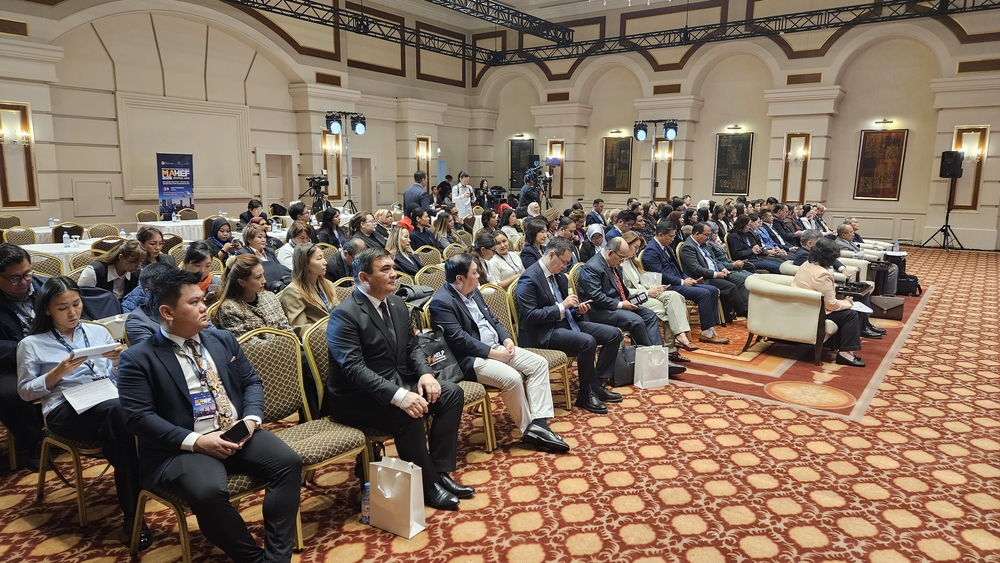
“Malaysia–Central Asia Higher Education Forum held in Astana”
Currently, the task of enhancing the science and education system—specifically through digitalization in accordance with high international standards and the exchange of experience with leading global academic and research centers—occupies a significant place in Turkmenistan's foreign policy strategy. Cooperation in this sphere with Malaysia—one of the most innovative nations in Southeast Asia—is yielding positive results and strengthening year by year. Relations between the two friendly nations in the field of education are being enriched with new substance and gaining significant momentum in line with the demands of the times.

On September 28, 2026, the Malaysia-Central Asia Higher Education Forum was held in Astana, Kazakhstan. Representatives from Central Asian countries attended the forum, including Berdinazar Hashyrov, an official from the Ministry of Education of Turkmenistan. The primary objectives of the forum were to align Malaysia's higher education system with those of Central Asian countries, foster international cooperation in higher education among the parties, and showcase Malaysian higher education institutions. During the first half of the day, speeches were delivered by the Ambassador of Malaysia to Kazakhstan, as well as representatives from the Malaysian Ministry of Higher Education, the Ministry of Science and Higher Education of Kazakhstan, and higher education institutions from both Malaysia and Kazakhstan. The presentations addressed issues regarding the development of cooperation in the education sector between Malaysia and Central Asian countries. Within the framework of the forum, discussions also took place regarding the development of cooperation in the education sector between Turkmenistan and Malaysia; in this context, a representative of the Ministry of Education of Turkmenistan noted that scientific and educational relations between the two countries rest on a solid legal-contractual foundation—specifically, agreements concluded during high-level meetings and sessions of joint intergovernmental commissions—and further highlighted that, in recent years, agreements on academic mobility and the exchange of experience have been signed between Turkmenistan’s leading higher education institutions and Malaysian universities that hold high positions in global rankings (such as Universiti Malaya and Universiti Tenaga Nasional). It was also noted that cooperation between the two countries' universities encompasses not only student academic programs but also the training of high- level specialists for strategic economic sectors; that the long-standing partnership between the Yagshygeldi Kakayev International Oil and Gas University and Malaysia’s world- renowned Universiti Teknologi Petronas (UTP) serves as an exemplary model in this regard, with successful implementation of joint curricula in fields such as geology, oil and gas engineering, chemical technologies, and energy; and that Malaysian professors and international experts frequently visit Ashgabat to conduct specialized training sessions and masterclasses for Turkmen students. It was also reported that modern educational institutions—such as the International University of Industrialists and Entrepreneurs and the Institute of Telecommunications and Informatics of Turkmenistan—are collaborating with prestigious Malaysian scientific centers and research institutes like CRUX; currently, the parties are working to enhance academic programs in cutting-edge fields such as marketing, logistics, the digital economy, cybersecurity, and artificial intelligence. During discussions at the forum, it was highlighted that Malaysia is one of the primary international destinations chosen by Turkmen youth for their education. Mention was made of the Malaysian Technical Cooperation Programme (MTCP), supported by the Malaysian Government, which enables specialists from various Turkmen ministries and agencies, as well as young scientists, to undergo short- and long-term professional development training at leading Malaysian educational centers. Furthermore, given the ongoing digitalization of the education sector, significant attention is being paid to the development of Turkmenistan-Malaysia online educational platforms. It was noted that experienced lecturers from Malaysian universities are conducting remote classes (via webinars) for Turkmen students on entrepreneurship and innovation, and that these classes help foster innovative thinking among students that aligns with global standards.

In the afternoon, representatives from eight leading Malaysian higher education institutions and related organizations—including University Malaysia Pahang Al-Sultan Abdullah (UMPSA), International Medical University (IMU), Education Malaysia Global Services (EMGS), University Tunku Abdul Rahman (UTAR), University Pendidikan Sultan Idris (UPSI), University Kuala Lumpur (UniKL), Asia School of Business, and Asia Pacific University of Technology and Innovation—delivered presentations.
Clearly, educational ties between Turkmenistan and Malaysia contribute significantly not only to the mutual benefit of both nations but also to ensuring sustainable development across the region, cultivating highly qualified professionals, and further strengthening bonds of friendship and trust between the peoples.